"The day I changed was the day I quit trying to fit into a world that never really fit me."
Why the leader who directs best makes no sound
We tend to imagine freedom as an open field. Limitless, unfenced, a place where nothing contains us and we can run in any direction without meeting a wall.
But the freedom that endures, the kind that creates and transforms, looks more like a cathedral than a meadow. It requires deep foundations, firm columns, and an internal structure strong enough to hold the dome of whatever we are trying to build.
To believe that freedom is simply the absence of rules is a child's illusion. To confuse it with doing whatever impulse dictates, without structure or consequence, is a more expensive one. That road does not lead to liberation. It leads to fragmentation. A structure without architecture collapses under its own weight. So does a company.
The freedom of an adult, of a leader, of anyone responsible for something larger than themselves, is a structure built on purpose. It is the deliberate choice of constraints that allow the essential thing to rise.
The silent conductor
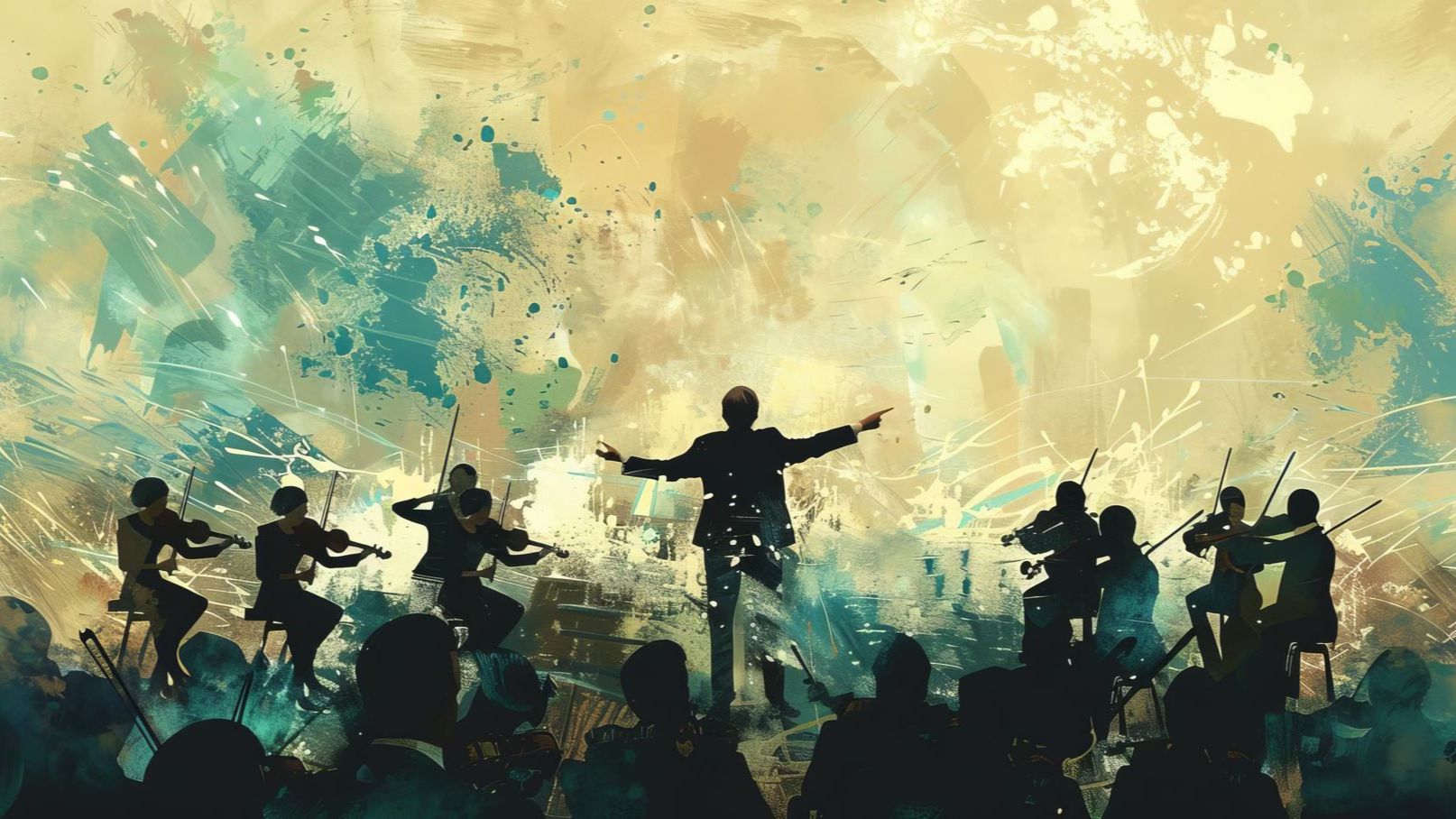
Watch the conductor of an orchestra.
In the middle of that thunder of violins, brass and percussion, he is the only person on stage producing no sound at all. He holds no instrument. And he holds the entire symphony.
His authority does not come from force, or volume, or from being the most skilled player present. It comes from the clarity of what he can see and the precision of when he asks for it. He does not force the violin to sound. He invites it into the space at the exact moment it is needed. He does not silence the drum. He balances it so that it supports rather than overwhelms.
This is flow without force. The conductor does not control the music. He creates the conditions under which it can emerge.
Leadership is that same art: directing without imposing. And freedom, in this reading, is not doing whatever you want whenever you want. It is the ability to choose exactly which note to play so that the whole thing means something.
What that looks like on a Tuesday morning
The metaphor is elegant. It is also easy to admire and difficult to apply, so it is worth translating.
The conductor does not play. That is the first and hardest translation. A leader who is still executing the work is not conducting. He is the loudest instrument in the section, and the orchestra is arranging itself around his volume instead of around the score. Most owners of small companies discover this late, and usually because something broke while they were busy playing.
The conductor cues rather than commands. He does not tell the cellist which notes to produce. He tells her when to enter. That distinction is the entire difference between delegating and supervising, and it rests on something uncomfortable: the cellist has to already know her part. If she does not, the problem is not the cue. The problem is that nobody taught her, and no amount of gesturing from the podium will fix it in the moment.
The score exists before the performance, and everyone can see it. No conductor keeps the music to himself and then expresses disappointment at the result. Ambiguity from the top is not humility. It is abdication with better manners.
He balances rather than silences. There is always someone playing too loud. The instinct is to remove them. The better move is usually placement, because the same intensity that overwhelms in one position carries the piece in another.
And he decides what will not be played. Almost nobody counts this as leadership. It may be the largest part of it.
The pillars
A temple needs columns. So does freedom, or it is only chaos wearing a better name.
Discipline, not as punishment but as tempo. Without a beat there is no melody, only sound arriving in the wrong order.
Vision, the invisible score that guides the steps before they are taken. The ability to see the cathedral while looking at a pile of stones.
Integrity, the acoustics of the room. If there are cracks in the structure, the sound of the whole thing distorts no matter how well anyone plays.
And restraint, the wisdom to hold without gripping. To stay fully present while releasing the need to control every outcome.
Without those, energy disperses into the air. With them, it is channeled, and channeled energy becomes something that exists in the world.
The final note
We are, in the end, architects of what we build. Every decision lays a brick. Every strategy designs an arch. Every standard we refuse to lower becomes a load bearing wall.
The question is not whether you are free. The question is what you are building with it, and whether anyone else can see the plans.
So be the conductor. Stop waiting for the music to start on its own. Raise the baton.
But remember that the most beautiful symphonies contain silence. They contain the notes deliberately not played. They contain the space between sounds, which is where the meaning actually lives.
Freedom is not only what you build. It is also what you decline to build.
Myriam Vanegas