On Roses, Sandalwood, and the Decision Not to Let a Wound Turn Us into What Wounded Us
There is something that never stops surprising me.
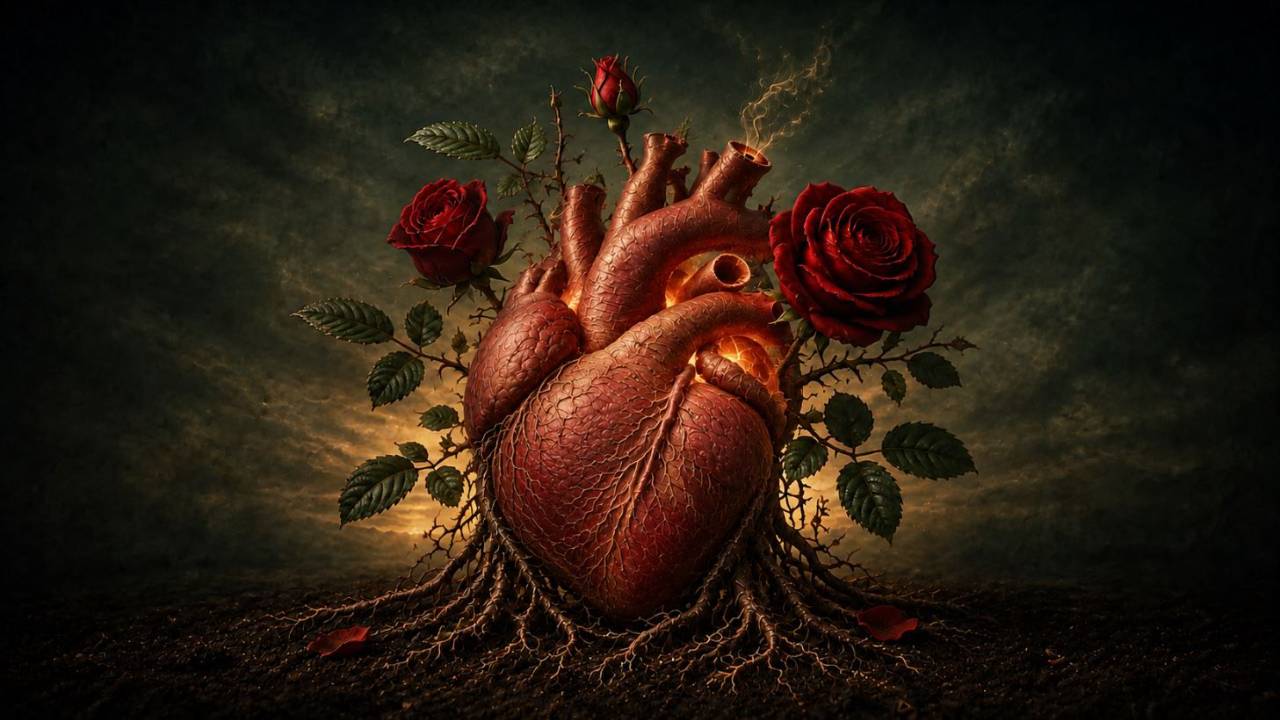
We tend to admire a rose for the delicacy of its petals, yet we almost never stop to look at what made that flower possible in the first place.
The stem. The roots. The thorns.
I heard recently that, over the years, rosebushes grow thicker stems and stronger thorns. Not because time makes them aggressive, but because life makes them capable of holding more.
More wind. More rain. More seasons. More flowers.
And then I remembered that the most beautiful roses that ever came into my hands, the ones that stayed alive longest in a vase, always had the firmest stems. They were the ones that kept offering their perfume even after being separated from the plant that gave them life.
Nature seems to know a secret that we human beings forget so easily.
True strength never competes with beauty. It sustains it.
The Sandalwood and the Axe
There is an old Hindu proverb that says:
Sandalwood perfumes even the axe that strikes it.
That image has always moved me.
Not because the sandalwood ignores the blow. Not because it does not feel the cut.
But because it understood that to stop giving its perfume would be to grant the axe a power it was never meant to have.
And perhaps that is one of the most difficult decisions in life.
Refusing to let what happened to us determine what we become.
What We Are Not Required to Carry
We all know the blow of the axe.
It comes under different names.
A betrayal. An abandonment. A lie. A loss. A word that should never have been spoken. A childhood where love did not know how to express itself the way we needed.
Sometimes the blow comes from someone who loved us with the tools available to them. Other times it comes from someone who consciously chose to wound.
But over the years I have come to understand something that profoundly changed the way I look at life.
I do not need to carry the weight of judging the heart of the person who hurt me.
I do not know all of their nights. I do not know the wounds that came before them. I do not know the fears they were acting from.
And when someone chose harm in full awareness, I do not need to become their judge either.
Life holds a wisdom infinitely more precise than our own.
Every life eventually feeds on what it has planted. Every action finds, sooner or later, the ground where it will grow. Not always when we want it to. But always when life considers the harvest ripe.
Understanding this does not erase the pain. But it does free us from the urge to carry what was never ours.
The Real Danger
The real danger was never that our hearts would break.
Hearts can break without losing their capacity to expand.
The real danger appears when, to avoid ever suffering again, we stop loving.
When we confuse caution with distrust. Discernment with hardness. Boundaries with walls.
Because then the wound no longer lives in the past. It begins to govern the present. And it ends up stealing the future.
Three Roles, One Stage
And there is another danger, quieter still.
That those who were pierced learn to pierce. That those who received the axe blow end up holding the axe.
It almost never happens out of cruelty. It happens out of habit.
Because pain that goes unexamined looks for somewhere to repeat itself. And without noticing, we begin circling through the same roles: one day we are the victim; another, the persecutor; and another, the rescuer who saves everyone to avoid looking within.
Three roles. The same stage. The same play performed over and over, changing nothing but the mask.
Stepping out of it does not mean forgiving faster or pretending nothing hurt.
It means no longer needing the role.
No longer waiting for someone to come and rescue us. No longer rescuing those who never asked to be rescued. No longer collecting from some people a debt that others incurred.
And that is where the truly courageous work begins: learning to hold ourselves steady.
Saying what we feel without turning it into an accusation. Asking for what we need without demanding it. Setting a boundary without closing the door. Allowing ourselves to be vulnerable without surrendering the helm.
Because autonomy is not about needing no one.
It is about no longer needing someone to be guilty in order for us to be innocent.
That is where the drama ends.
And that is where life, at last, begins.
What Thorns Were Actually For
Thorns were never born to keep the rose from blooming. They were born to let it keep blooming.
How different our lives would be if we understood that.
Healthy boundaries are not a renunciation of love. They are a mature expression of it.
They do not say: "I will never trust again." They say: "Now I know how to take care of myself while I keep loving."
They do not say: "I will close my heart." They say: "I have learned that an open heart also needs wisdom."
They do not say: "I will never give my essence away again." They say: "My essence will no longer depend on how others decide to treat it."
Where the Roots Come From
Over the years we discover that peace does not arrive when the world stops hurting us.
It arrives when we stop granting the blows the right to define us.
Because then something extraordinary happens.
Wounds stop being prisons. They become roots.
Scars are no longer marks of shame. They become memory.
And thorns stop being symbols of defense. They become the silent guardians of a garden that finally learned to bloom without ceasing to protect what it loves.
The Widened Vessel
A rose never stops being a rose because it has thorns. And sandalwood never stops giving its perfume because an axe strikes it.
Perhaps the evolution of the soul is not about arriving at the end of the road untouched.
Perhaps it is about refusing to let each wound reduce our capacity to love.
About letting pain give us depth without making us dark; discernment without making us suspicious; boundaries without turning them into walls.
Because there are hearts that, after being struck, shrink so they will never feel again.
And there are others that perform a far more difficult alchemy: they grow wider.
Not because the harm was good. Not because the one who wounded deserves our perfume.
But because they refuse to hand another human being the authority to decide what they will become.
Perhaps that is the deepest form of freedom: discovering that what we lived through did not harden the heart, it widened the vessel.
And that now we can hold more truth without losing tenderness, more wisdom without losing hope, and more love without abandoning ourselves again.
Myriam V.
The Path of the Rose does not intend to give you answers. It intends to offer you a mirror.
It is a work of mythology, mystery, and consciousness for those who have ever felt that their path was too intense, their wound too great, or their light too solitary.
A journey through darkness, beauty, and the questions that lead us back to our own essence, until we remember that every thorn has always been part of the rose.
If something in these words spoke of you too, perhaps the path has already begun.
Read The Path of the Rose — Where the Wound Becomes Beauty on Amazon →
Also available in Spanish as El Camino de la Rosa and in Portuguese as O Caminho da Rosa